Press release posted September 2025
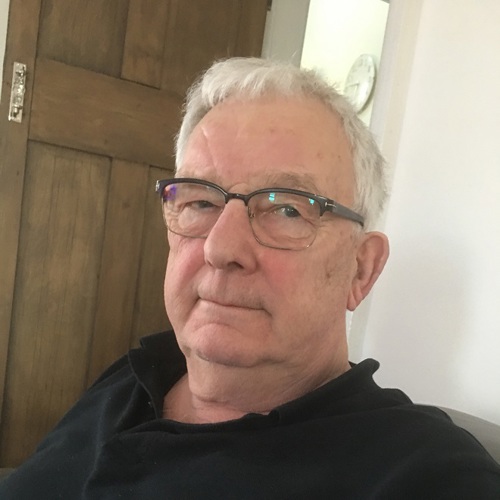
Stephen Dunn from Middleton, Rochdale, is among the first patients to benefit from a pioneering new service enabling patients with pacemakers and other cardiac devices to safely undergo cancer treatments.
The specialist cardiac device service was launched in September 2023 at The Christie NHS Foundation Trust in Manchester.
Stephen, 72, a semi-retired truck and van driver, was diagnosed with melanoma in August 2024 after his wife Kay noticed that a mole on his lower back was getting bigger, and its colour and shape had changed. Following a prompt referral, he was seen at The Christie the following month.
However, a complication emerged. Stephen, who had been living with atrial fibrillation for many years with the help of medication, had been fitted with a pacemaker in 2022 after a routine HGV licence examination revealed heart failure. His heart function had dropped to just 14%, despite showing no outward symptoms.
Atrial fibrillation is a common heart rhythm problem which causes the upper chambers of the heart (atria) to beat irregularly and rapidly, potentially leading to blood clots and increasing the risk of stroke.
The pacemaker, vital for regulating Stephen’s heart rhythm, presented a significant challenge for the surgical team. Standard surgical tools like electrocautery - which use electrical currents to stop bleeding - can interfere with cardiac implantable electronic devices such as pacemakers and defibrillators.
Thanks to the newly established cardiac device service at The Christie, the procedure was able to go ahead safely and without delay. The team, made up of specialist cardiac physiologists, was present throughout Stephen’s surgery. They ensured the pacemaker was deactivated at the start of the procedure and then reprogrammed immediately afterwards in the operating theatre, maintaining Stephen’s safety throughout.
Stephen said: “The cardiac devices team were very calm and reassuring. They explained everything, which gave me the confidence to trust that they understood my heart condition as well as being a cancer patient.”
The surgery was a success, and Stephen has since been told he does not currently require further cancer treatment. “I’m living with the mindset that for now, I’m cancer-free,” he added.
Stephen praised the speed and co-ordination of his care: “The Christie started my treatment within just over a week of my first appointment. Every department, including the cardiac device team, shared results quickly and effectively. At the most stressful of times, the situation was explained with compassion and empathy. I felt confident that the whole team were doing their utmost to keep me alive and well.”
Stephen, a devoted Manchester United fan who has travelled extensively in Europe and has two grown-up daughters will remain under follow-up care at The Christie. He and his wife Kay, who have been married for 31 years, love visiting Italy, and for many years visited at least twice a year.
A new service for a growing need
The cardiac device service provides a dedicated on-site service at The Christie’s Withington site for patients with pacemakers and defibrillators who are undergoing cancer treatment.
Patients with electronic implanted devices are at greater risk from certain treatments or imaging scans because they might interfere with the device.
The cardiac devices team support cancer patients who have pacemakers or defibrillators during treatment and MRI scans, enabling patients like Stephen to receive life-saving treatment faster.
In the past, patients requiring MRI scans or surgery at The Christie in Withington faced delays or were treated at other sites and radiotherapy patients travelled to Oldham, Salford, or Macclesfield. This added to patient stress and disrupted continuity of care.
With the introduction of the on-site service at The Christie’s Withington site, patients now receive seamless, coordinated care without unnecessary travel or delay.
Patients receive pre and post-procedure assessment and device checks, and pacemakers and defibrillators are reprogrammed or put into MR-safe mode, where necessary, with the patient’s ECG/heart rhythm being monitored throughout. Normal device function is restored immediately after treatment.
Janet Kipping, cardiac physiologist at The Christie, explained: “Support for patients with cardiac devices used to be inconsistent and could result in delays or impaired outcomes. Now, they receive expert cardiac support here at The Christie in Withington, significantly improving their experience and safety.”
Over the service’s first year, more than 180 patients were referred for assessment. Of these, 124 received active support, including 57 patients having an MRI scan, 40 patients undergoing radiotherapy (each with multiple treatment sessions), 21 patients having surgery, and the UK’s first patient with a cardiac device to have proton beam therapy. In total, the team has performed more than 550 device checks.
Training has also been provided to staff across The Christie to ensure better management of patients with cardiac devices during cancer treatment.
The service has been developed in collaboration with Manchester University NHS Foundation Trust, whose cardiac device specialists work on-site at The Christie.
The success of the new cardiac device service highlights The Christie’s commitment to delivering patient-centred care. By removing barriers to treatment for cancer patients with cardiac devices, the Trust is improving outcomes and patient experience.
With people living longer, there will be more cancer patients with a cardiac device arriving at The Christie in the years ahead. As the service expands and evolves, the team is already working on new protocols to support an even wider group of patients.
National first in proton beam therapy
Among those to benefit from the new cardiac service is 70-year-old David Iddiols from London, who became the first person in the UK with a cardiac device to receive proton beam therapy.
David, a retired market research company owner and president of Hanwell Town Football Club, was diagnosed with a rare cancer called chordoma. He had previously had a pacemaker fitted due to a dangerously low heart rate and irregular rhythm.
Proton beam therapy, a highly targeted form of radiotherapy, was considered the best treatment option for David. However, proton beam therapy had not been attempted in the UK prior to this for patients with a cardiac device
Whilst David was considering treatment options abroad, The Christie in Manchester was preparing to launch its specialist cardiac device service. With the new service in place, The Christie felt equipped to carry out the first proton therapy treatment on a patient with a pacemaker, David. He began proton therapy in January 2024.
Each day before his treatment, the cardiac team adjusted David’s pacemaker — slowing it down, speeding it up, and leaving it running marginally faster during the actual treatment, then slowing it back down to the usual rhythm and checking everything was operating as it should be. With the support of his wife Karen, he underwent 41 sessions over eight weeks.
"The cardiac devices team were very reassuring, and I felt safe with them,” said David. “They answered all my questions. Since the treatment finished, I have been good.”
For people like Stephen and David, the difference the new cardiac devices service has made is life-changing.