News story posted 22 May 2026
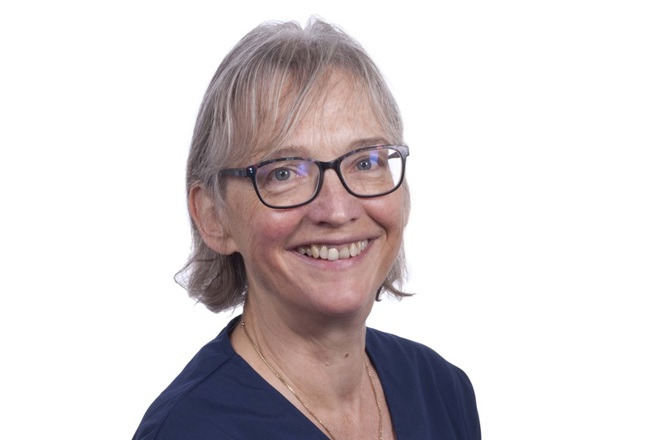
For more than 3 decades, Jacqui Stringer has helped reshape how care is delivered to cancer patients at The Christie. Now, as she prepares to retire after 34 years, she is reflecting on a career that has helped define how integrative therapy is understood and delivered, both within the NHS and internationally.
Through her work developing complementary and integrative therapies, Jacqui has helped establish approaches that support patients through treatment, improve quality of life, and, in some cases, make treatment itself possible.
Her work began in the early 1990s on the adult leukaemia unit at The Christie. What started as a small, nurse-led initiative has grown into a globally recognised service. Today, the integrative therapies team combines clinical care, research and education, supporting patients across all tumour groups.
The team provide a range of interventions that sit alongside conventional cancer treatment, helping patients manage symptoms, anxiety and treatment-related complications.
Looking back, Jacqui believes the most important change has been the shift in how these approaches are understood.
“When I first started, people talked about complementary therapies as if they were a nice extra,” she says. “But for some patients, it is not an optional extra. It can be an integral part of getting them through treatment safely.”
Early career influences
Jacqui trained as a nurse in Hull, qualifying in 1983. Early in her career, she worked in gynaecological theatres, where oncology cases were common.
“At that time, healthcare was very hierarchical,” she says. “Patients often had to wait for the consultant ward round to understand what was happening. There was a lot of anxiety.”
Seeking better ways to support patients, Jacqui travelled to the United States, where she was introduced to more patient-centred approaches to care. She became interested in how emotional well-being could influence how people coped with cancer.
Back in the UK, she studied psychology at the University of York with the aim of becoming a clinical psychologist working in oncology. However, she soon realised she could make a more immediate difference by remaining in nursing.
“I realised that if I worked alongside patients in a supportive way, they could relax and talk if they wanted to,” she says. “At the same time, I could use my clinical knowledge to identify issues and refer them on.”
She later moved to Manchester and joined The Christie, initially working on the adult leukaemia unit.
Cancer care in the early 1990s
The environment on the adult leukaemia unit in the early 1990s was very different from today.
Patients receiving intensive chemotherapy were cared for in isolation rooms for long periods due to infection risks. Visiting was restricted, and contact with others was limited.
“Patients were in what we described as a goldfish bowl,” Jacqui says. “They were behind a plastic door, and visitors had to sit outside and talk through it. Only two people could visit for the whole of their stay.
“They were often confined for 6 to 8 weeks. Many were young and used to active lives, but suddenly found themselves unable to exercise, socialise or see their families regularly.
“The physical and emotional impact could be severe,” Jacqui says. “Muscle cramps, anxiety and sleep problems were common. Some patients needed strong medication for pain or distress.”
Jacqui began exploring whether techniques such as massage could help.
At the time, this was controversial. There were concerns about bruising and infection in patients with compromised immune systems.
With support from Professor Howie Scarffe, clinical director of the adult leukaemia unit, Jacqui trained in clinical massage and adapted her approach for haematology patients.
Early patient impact
The benefits were quickly seen.
Jacqui recalls a young patient whose severe muscle cramps led to escalating medication. “He had been given morphine, but it caused side effects that made things worse,” she says.
A gentle massage helped reduce the pain, break the cycle, and reduce the need for medication.
In another case, a patient with acute anxiety and dangerously high blood pressure was unable to begin treatment. After a short session of gentle touch techniques, she relaxed, fell asleep, and her blood pressure reduced. Over time, she stabilised enough to start treatment.
“It showed that these approaches could make a real clinical difference,” Jacqui says.
Bringing science into integrative care
As her work developed, Jacqui recognised the need for robust evidence.
One early challenge was demonstrating that essential oils could be used safely in an environment with immunocompromised patients.
Working with microbiologist Peter Warn, she investigated their antimicrobial properties. Laboratory testing showed that many oils were effective at killing bacteria and fungi, rather than spreading them.
This work helped establish a scientific basis for their use and opened the door to further applications.
Jacqui went on to develop targeted treatments to support wound care, skin conditions and infections that were difficult to treat using conventional methods.
“In some cases, patients could not proceed with chemotherapy until these issues were under control,” she says. “These treatments helped stabilise patients so they could receive the cancer therapies they needed.”
All interventions were carefully documented and risk assessed in line with the hospital’s clinical governance process. Transparency, she says, was critical. “I always wanted the Trust to know exactly what I was doing and why.”
Building a pioneering service
As demand grew, the work expanded beyond a single ward for haematology patients.
In 2000, Peter Mackereth joined the team, helping to develop the service across The Christie. While Jacqui focused on clinical practice and research, Peter supported education and service development. Together, they helped establish one of the UK’s first structured integrative oncology services.
The team published research papers and delivered training, and supported other organisations in developing similar services.
Today, the team supports patients across all tumour groups and continues to develop new approaches based on clinical need.
Addressing complex clinical needs
Jacqui’s work has often focused on areas addressing clinical problems that may be overlooked in conventional care pathways.
This includes the management of fungating wounds, which can cause severe discomfort and distress for patients with advanced cancers and complications following stem cell transplant, such as graft-versus-host disease.
Through collaboration with microbiology and clinical colleagues, she developed targeted mouthwashes and topical treatments using essential oil combinations with antimicrobial properties to help manage a condition, which can cause serious debilitation and can prove fatal.
“In many cases, patients have been through very intensive treatment, but their quality of life is miserable,” she says. “Supporting their quality of life is really important.”
Supporting women after cancer treatment
One of Jacqui’s most significant contributions has been her work supporting women experiencing long-term side effects of cancer treatment, such as severe vaginal dryness and pain caused by graft-versus-host disease or inflammation from aromatase inhibitors.
“These symptoms can have a profound impact on relationships, intimacy, and quality of life,” Jacqui says. “But many women feel embarrassed to talk about them, particularly with a male consultant.”
Working with clinical colleagues, Jacqui developed specially formulated pessaries using selected essential oils designed to relieve symptoms while remaining safe for patients with hormone-sensitive cancers.
Laboratory testing ensured the formulation did not stimulate cancer cell growth. Additional microbiology studies assessed their effects on vaginal flora and safety for long-term use.
For some patients, the impact has been life-changing, with one woman reporting that she’d been able to have sex for the first time in 10 years.
The pessary formulation has been approved by The Christie’s drugs and therapeutics committee, ensuring it can continue to be used after Jacqui’s retirement.
Changing perceptions
Over time, Jacqui has seen a seismic shift in attitudes towards integrative therapies. Initially, many clinicians viewed complementary therapies with scepticism. “What was once seen as an optional extra is now recognised as an important part of supportive care,” Jacqui says.
The Christie’s integrative therapy service is now internationally recognised, and with Jacqui and her colleagues contributing to evidence-based research, education and international collaboration on integrative therapies.
A lasting legacy
After stepping back from her leadership role in 2022, Jacqui has focused on mentoring colleagues, research collaborations, education (through the Integrative Therapies Training Unit) and international initiatives.
Eileen Hackman, clinical lead for integrative therapies at The Christie, said: “Jacqui’s retirement marks the close of a remarkable chapter and the continuation of a legacy that has shaped our service in profound ways. Her encouragement and belief in others helped develop the team we have today.
“We are committed to building on that legacy, nurturing the future workforce, and continuing to innovate for the benefit of our patients. Thanks to Jacqui’s pioneering work, integrative therapies have become an established part of supportive care in oncology throughout the world.”
Reflecting on her career, Jacqui said: “My most important achievement has been helping patients receive care that recognises both physical and emotional needs. That’s only been possible because some of our leading doctors were open to exploring something new when it was safe and showed patient benefit.
“Cancer treatment is incredibly challenging. If we can support patients in ways that make that journey easier and safer, then that is worth everything.”