This information is about hand hygiene. It explains different ways to clean your hands and how hand hygiene can help reduce infections in hospital, both for yourself and others.
As a result of contact with people, equipment or surroundings, your hands can become contaminated with a wide variety of bacteria and viruses (germs), some of which can cause infection. Hands may look clean, but germs which are not visible to the human eye may still be present. Effective hand hygiene plays a very important role in the prevention and control of infection.
Types of hand hygiene
Hand washing
Hand washing with soap and water is commonly undertaken in hospitals. This is enough for general, social contact and most clinical care activities. Hand washing is used to maintain personal hygiene and must always be used when hands are visibly dirty.
It is important to wash your hands:
- before handling food, eating, drinking, or taking medicines
- if you are a patient and have diarrhoea and/or vomiting
- if you are visiting a patient who is experiencing diarrhoea and/or vomiting
- after using the toilet, bedpan, or commode
- after coughing, sneezing, or blowing your nose
- if you are visiting a patient who has any symptoms of cough or influenza (flu)
- after touching animals or animal waste
- after handling waste/rubbish
- after gardening
- after changing a nappy
- before and after touching wounds, intravenous drips or changing a dressing
- when they are visibly dirty
- before and after visiting someone in hospital
Hand sanitiser (alcohol hand rub)
Hand sanitiser (alcohol gel) is more effective than soap and water if hands are visibly clean before application. Hand sanitiser is applied directly onto dry hands. It must not be used if you have diarrhoea and/or vomiting or if you are visiting a patient with these symptoms. Hand sanitiser dispensers can be found in clinical areas where patient care takes place.
It is especially important to wash your hands with soap and water before entering and leaving a clinical area where there are patients experiencing symptoms of diarrhoea and vomiting, as hand sanitiser only has a limited effect on germs causing vomiting and diarrhoeal illnesses.
Hand cleansing wipes are available for all patients and are particularly useful if you cannot easily access hand wash basins or hand sanitisers; please ask a member of staff if you would like some.
7-stage hand hygiene technique
The correct way to wash your hands is shown below, repeat each step 5 times:
Wet hands with tepid (slightly warm) running water before applying soap.
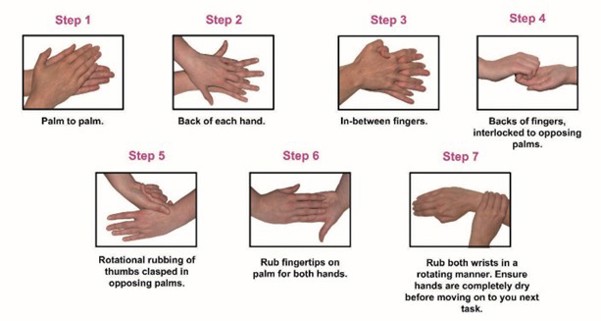
Drying your hands thoroughly is very important. Where possible use disposable paper towels or try to change your hand towel daily.
Hand care
If done correctly, the hand washing steps shown in this leaflet will help you to undertake hand hygiene correctly, using the 7-stage hand hygiene technique.
Use the same 7-stage technique that you would use when washing hands with soap and water when using hand sanitiser to reduce the risk of cross-infection to you and others and to reduce the risk of the skin on your hands becoming sore.
Remember
It is important to regularly wash your hands even if they do not look dirty, as germs cannot always be seen with the naked eye. Inpatient areas will have hand washing sinks and hand gel dispensers around the ward areas, including the ward entrances and exits.
Ask yourself:
- what am I going to do?
- what have I just done?
- should I wash my hands?
How you can help to stop infection
There are a number of ways you can help to stop infection, especially if you are visiting hospital or someone who is unwell.
- Do not visit if you feel unwell, or if someone you live with has a cold or flu-like symptoms, diarrhoea and/or vomiting.
- Wash your hands or use hand sanitiser when entering or leaving a clinical area and regularly in between, even if they look visibly clean.
- Ask healthcare staff for advice before you take food or drink into a healthcare environment.
- Do not sit on patients’ beds, use the available chairs allocated on the ward.
- Do not touch dressings, catheters, or other clinical equipment unless you have received advice and training.
- Tell the person in charge if you think an area of The Christie is not as clean as it should be.